Oak islands
Forests that sit like islands in the meadow sea
Near Rehburg-Loccum the open wetland country finally grows a dark edge. These are not alpine woods. They are oak and mixed stands on slightly higher ground, close enough to Steinhuder Meer that you can ride from glare into shade in a single hour.
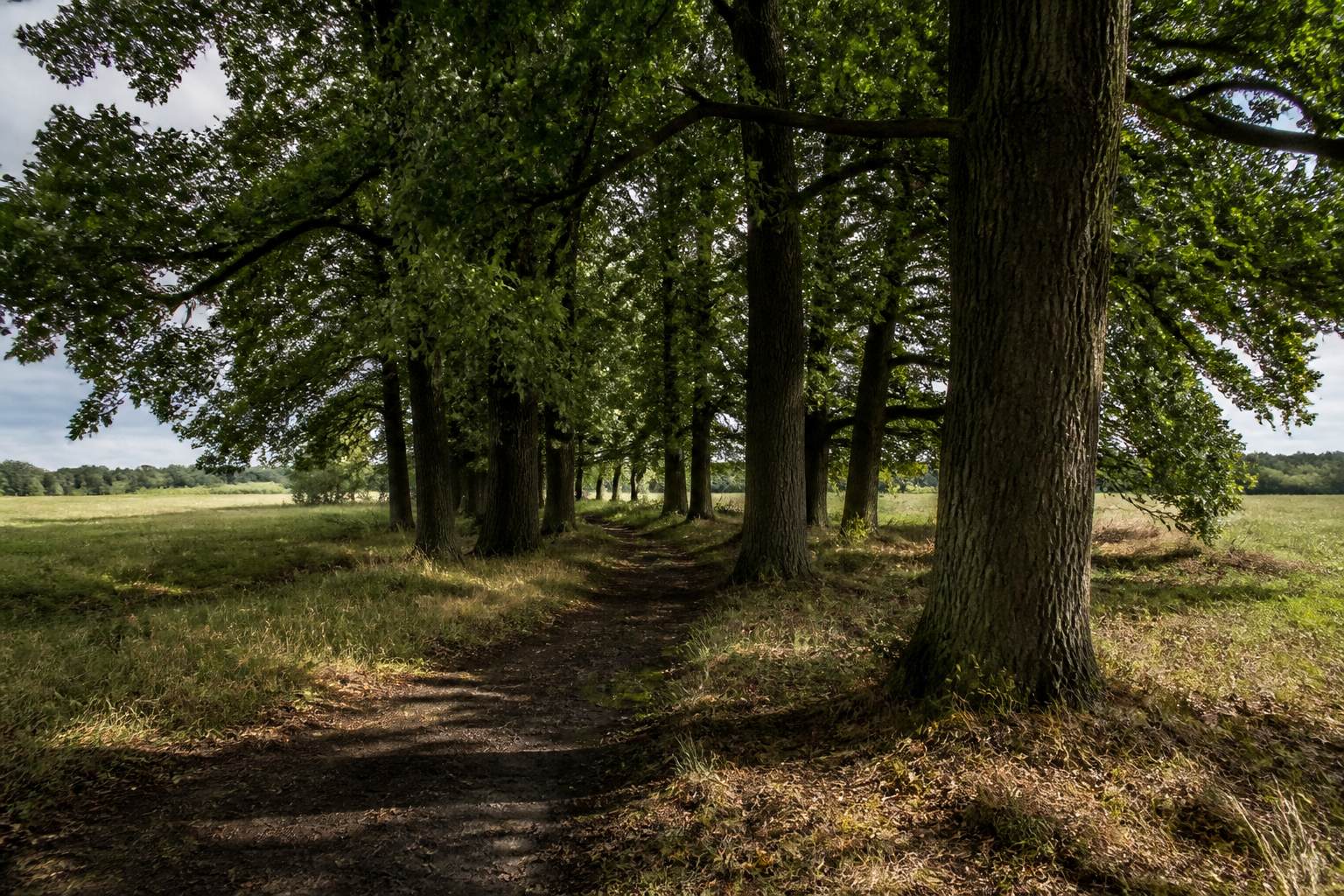
Nothing blocks the horizon out on the water. In the oaks, the horizon is replaced by trunks. The journey is the contrast between those two rooms of air.
From the meadow edge looking in, Rehburg country
Why the trees bunch here
The Rehburger Berge are modest rises, not a mountain chain. That small extra height is enough to change soil and drainage. Oaks take the ridges; wet meadow and sometimes peat keep the flats. Walking the forest roads you still feel the plain: rides are long, gradients are gentle, and every clearing throws you back into silver sky. Loccum’s monastery landscape nearby is a cultural layer; the ecological layer is simpler — woodland as island, meadow as sea.
Day three of the five-day walk is designed around this contrast. You leave the lake circuit, ride farm lanes, and let the canopy close. After the Weser meadows of day four, described in the floodplain chapter, you will understand why forest time matters: without it the wetland trip is all glare and wind.
How to use the woods without treating them as a park ride
Stay on marked forest roads. After storms, oak limbs drop. In tick season, long trousers are not optional. The wildlife interest here is different from the reed: woodpeckers, deer at dusk, sometimes a kite over the last field. Do not expect the dense bird spectacle of Dümmer. Expect temperature drop, leaf smell, and a horizon that has been postponed until the next clearing.
Practical arrival is via Wunstorf or Rehburg-Loccum buses in combination with a bicycle. Surfaces mix forest gravel and quiet tarmac. A packed lunch is more reliable than counting on a woodland café. Carry water; shade does not mean streams you should drink.
Return to water, or keep the shade
The oak edge is a hinge: lake on one side, Weser grass on the other.